
Concrete Patio vs. Pavers in Houston: Cost, Durability, and Best Uses Compared
Concrete patios and pavers both work in Houston backyards, but they perform very differently. Concrete patios cost less upfront and typically last 30+ years with light maintenance. Pavers cost more, allow easier repair of individual stones, and shift more under Houston's expansive clay soil.
The most common patio rebuild we see across the Greater Houston area is a paver patio installed five to seven years earlier on an improperly compacted clay base. The pavers themselves haven't failed. The ground beneath them shifted, and the only real fix is to tear them out and start over. Concrete on the same lot, built with proper joints and base prep, doesn't have that drawback. The slab moves with the soil rather than apart from it.
As a licensed, locally owned concrete contractor serving the Greater Houston area , Concrete Specialists of Texas explains what each surface actually involves.
Concrete Patio vs. Pavers: The Honest Cost Comparison
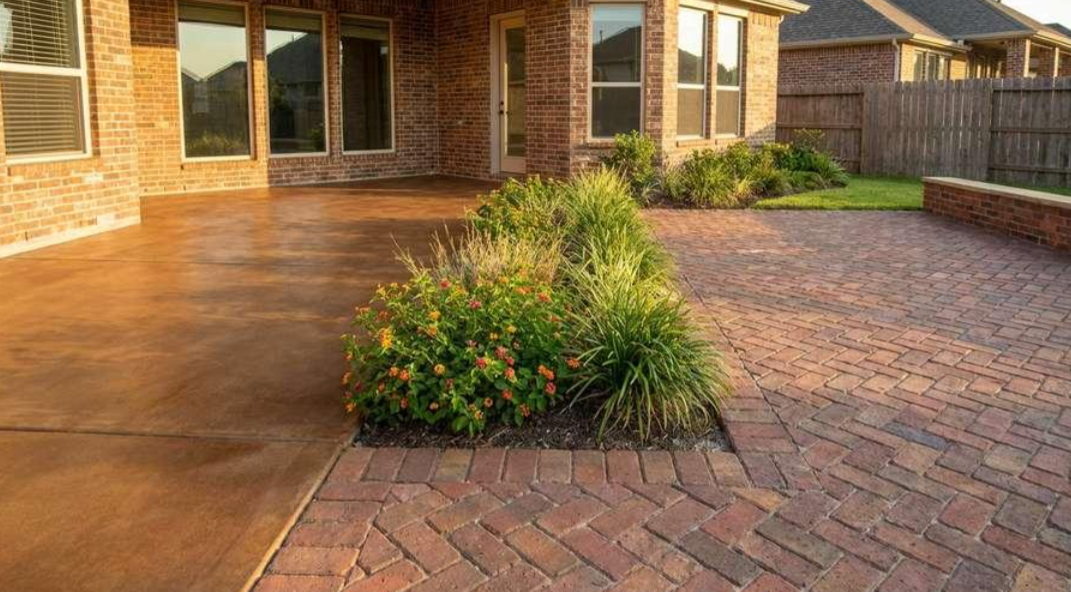
A standard broom-finish concrete patio in Houston runs $8 to $15 per square foot installed. Decorative finishes like stamped, stained, or exposed aggregate push that to $12 to $25 per square foot. A paver patio in the same market typically lands between $15 and $30 per square foot installed, depending on the paver type and pattern.
Pavers cost more for two reasons: the per-unit cost of the stones themselves and the labor to set each one by hand on a compacted base with edge restraint. A 400-square-foot patio in standard concrete costs $3,200 to $6,000. The same patio in pavers usually runs $6,000 to $12,000. Decorative concrete sits between the two on most quotes.
Durability in Houston's Clay Soil and Heat
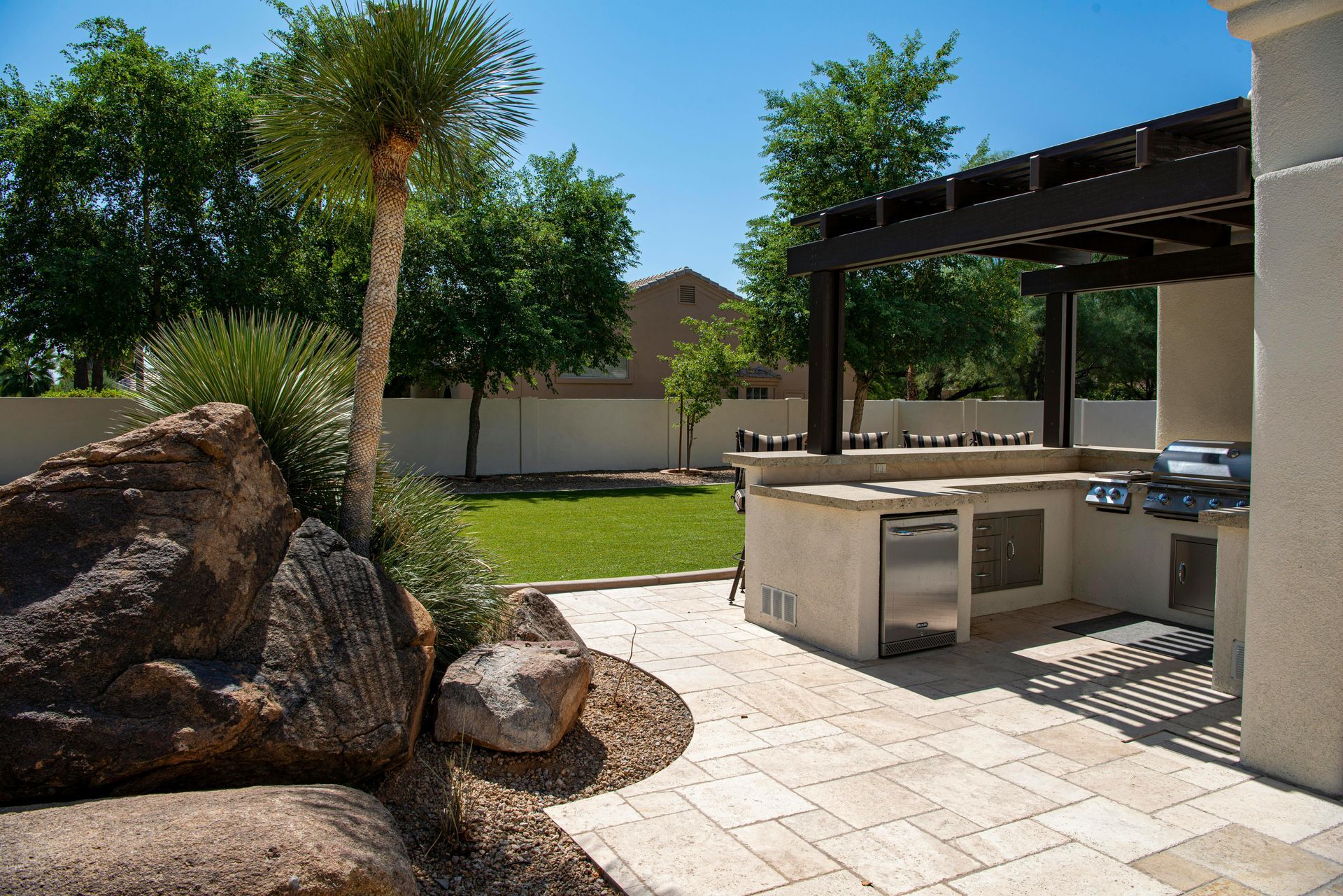
Properly installed concrete in Houston's no-freeze climate can last 30+ years. Pavers typically last 25 to 30 years before requiring a full reset, with the caveat that paver patios over expansive clay often need re-leveling every 5 to 8 years.
The reason is the joint system. Concrete is a single rigid slab. With proper control joints every 8 to 10 feet and a 4-inch compacted base, it absorbs clay soil movement as flex along predictable lines. Pavers are individual units sitting on a sand-set or polymer-set base, so when the clay beneath shifts, they tilt, sink, or pop up, leaving the surface uneven. Houston's heat affects both surfaces minimally; neither softens nor deforms. Concrete radiates more heat during the day, while lighter-colored pavers stay slightly cooler underfoot.
Maintenance and Repair Differences
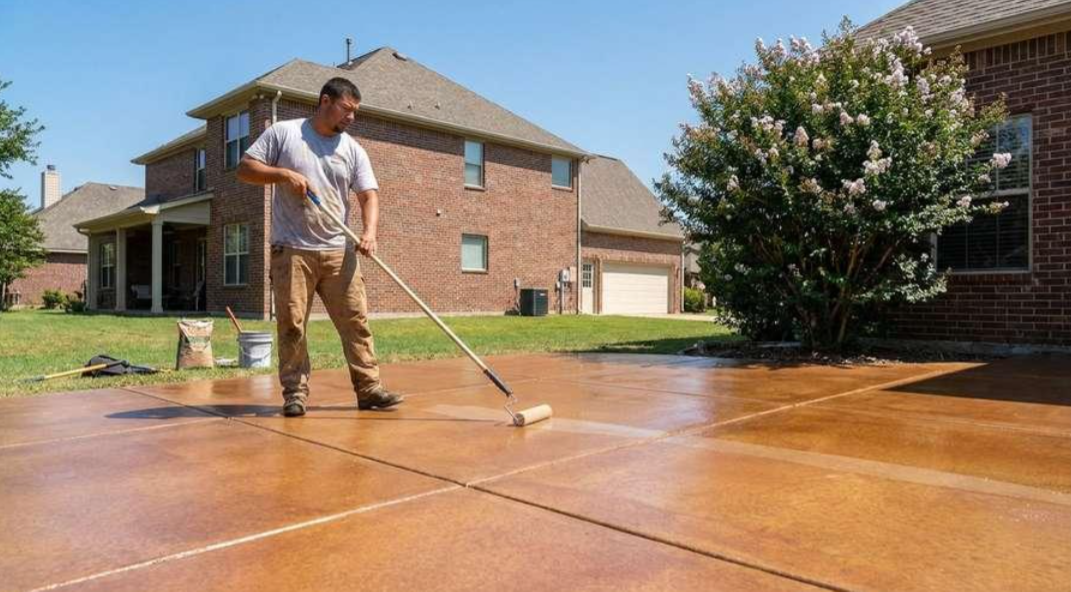
Concrete patio installations need a pressure wash twice a year, fresh sealer every 2 to 3 years, and joint inspection annually. Pavers require sand replenishment in joints every 1 to 2 years, weed treatment between stones, and re-leveling when settling appears.
Repairs go in opposite directions. A cracked concrete slab is harder to repair invisibly. Surface cracks can be filled and sealed, but a full visual restoration usually means an overlay. Damaged pavers are easier to replace individually, as long as the original stones are still available from the manufacturer. Both surfaces stain. Concrete with a quality sealer resists oil, food, and beverage stains for the sealer's lifespan, whereas pavers tend to stain at the joints regardless of sealer, as the sand and polymer fillers absorb spills.
Where Concrete Wins, Where Pavers Win
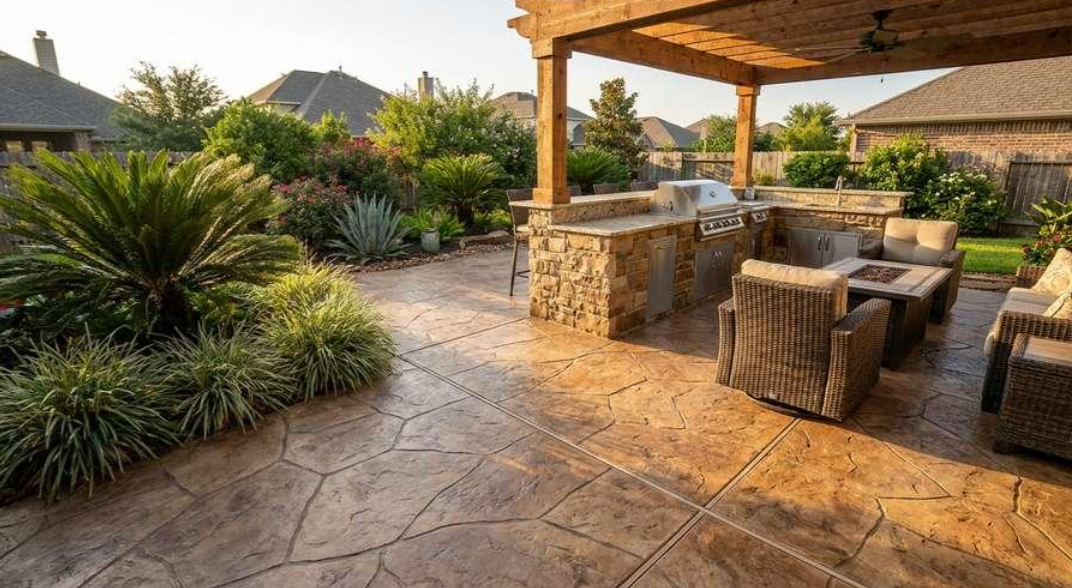
Concrete is the better choice for:
- Larger continuous patios over 250 square feet, where labor savings compound
- Outdoor kitchens, pergolas, and built-in seating that need a stable level surface
- Long-term ownership of 20+ years
- Modern, clean-line design preferences
Pavers are the better choice for:
- Smaller decorative patios where individual repair flexibility matters
- Steeply sloped lots where individual unit drainage helps
- Existing landscapes where future expansion is likely
- Traditional or European garden aesthetics
Frequently Asked Questions
Is it cheaper to build a patio with pavers or concrete in Houston?
Standard residential concrete is cheaper than pavers in Houston, typically by 40 to 60 percent for a comparable size. A 400-square-foot standard concrete patio costs $3,200 to $6,000, while the same patio in pavers usually costs $6,000 to $12,000. Decorative concrete fits between the two and offers the most design flexibility per dollar.
How much does a 20x20 concrete patio cost in Houston?
A 20-by-20 patio covers 400 square feet and typically runs $3,200 to $6,000 for a standard broom finish in the Houston market. Decorative finishes, including stamped, stained, or exposed aggregate , push that closer to $4,800 to $10,000. Site conditions and access also affect the final quote on every project.
What are the cons of concrete patios in Houston backyards?
The main drawbacks are crack repair (which is harder to make invisible than swapping a paver), fewer color and pattern options than pavers in standard finish, and slightly higher daytime heat absorption. Decorative finishes address most design concerns, and proper installation with control joints minimizes long-term visible cracking.
Build the Backyard Surface That Fits Your Life
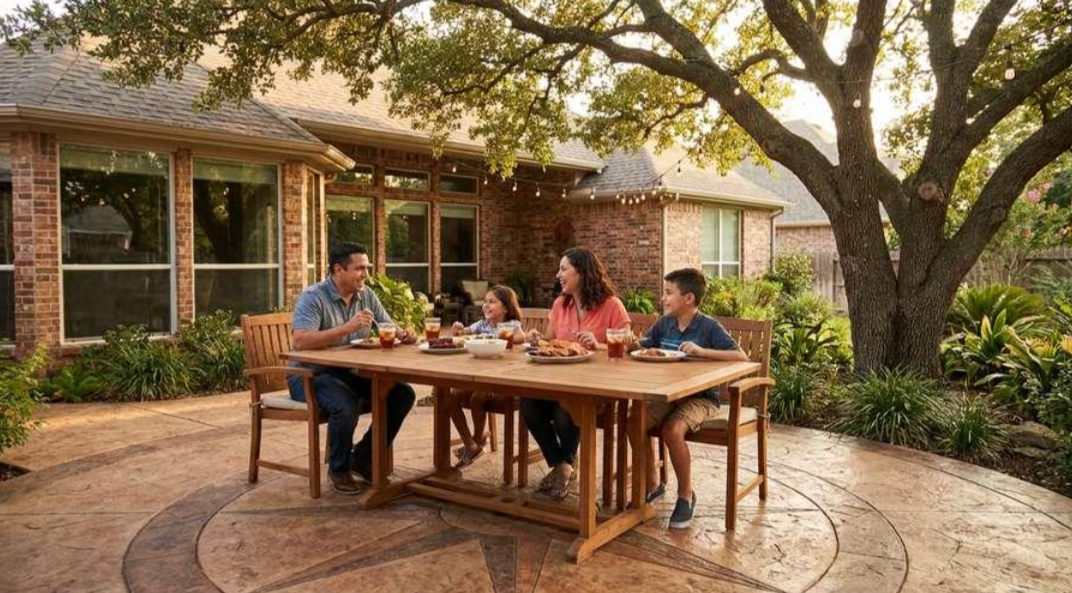
Concrete Specialists of Texas installs concrete patios across the Greater Houston area—standard broom finish, stamped, stained, and exposed aggregate—with transparent pricing and a 100% satisfaction guarantee. If you've been comparing concrete and pavers and want an honest assessment of what makes sense for your backyard and your soil, contact our team online or call (346) 812-9757 .