
How Thick Should a Concrete Driveway Be? Houston Contractor Explains
How thick should a concrete driveway be? In Houston, a residential concrete driveway should be poured 4 to 6 inches thick over a properly compacted base, with the upper end recommended for the expansive clay soil common across the metro. Concrete Specialists of Texas builds to that standard and explains why below.
Two years ago, we replaced a five-year-old driveway in East Houston that was poured at 3.5 inches with no reinforcement. The slab had cracked through in eight places, settled along the apron, and pulled away from the garage by half an inch. The replacement, poured at 5 inches with rebar over a 4-inch crushed-stone base, looks the same on the surface but is designed to outlast the original by decades. Thickness is what changes that outcome.
The Standard: Why Houston Driveways Need 4 to 6 Inches
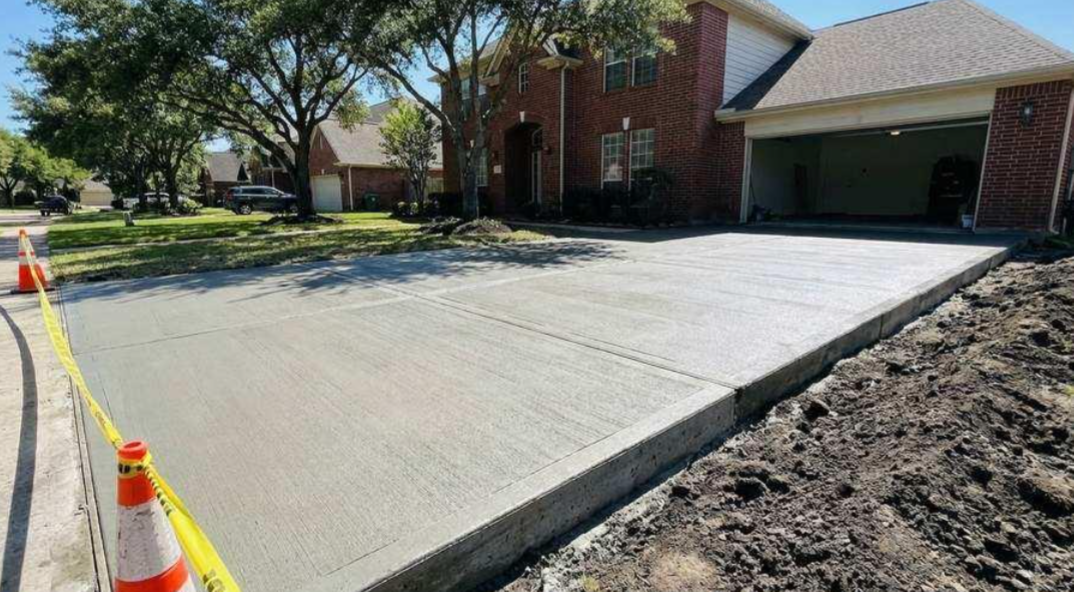
The published industry baseline for residential concrete driveways is 4 inches across most of the United States. In the Greater Houston area, we recommend a 5- to 6-inch slab as the working standard for residential driveways and 6 inches as the minimum for any driveway that will see regular truck or RV traffic.
Houston's expansive clay soil moves continuously with moisture. A 4-inch slab on Houston clay flexes more under that movement and cracks earlier than the same slab in a stable Midwestern soil. The extra inch or two of thickness provides the structural reserve needed to absorb that movement without failure.
How Slab Thickness Changes by Use and Vehicle Weight
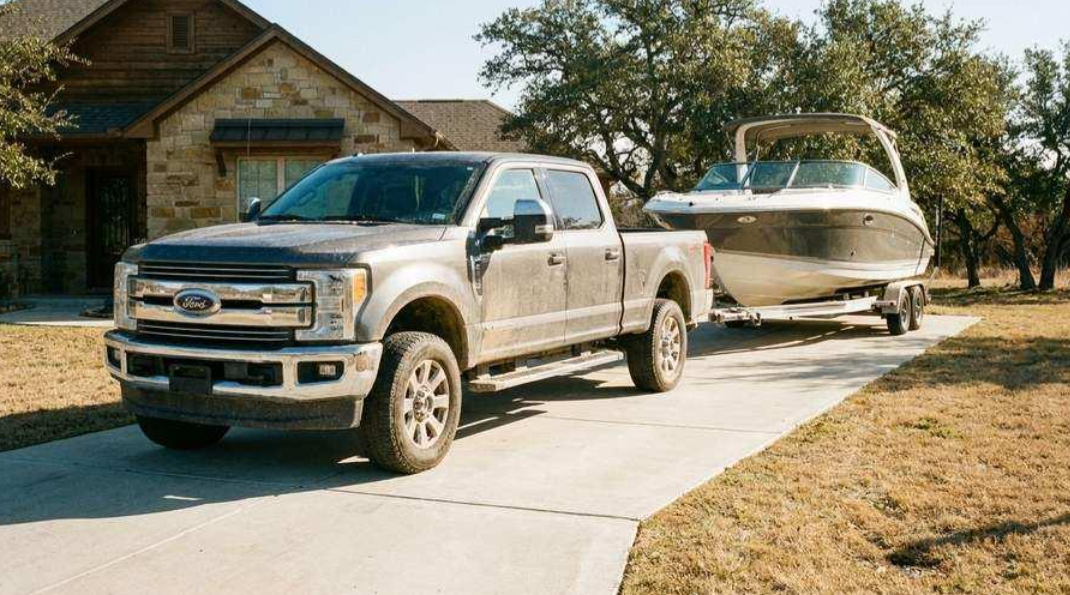
Standard passenger vehicles weigh between 3,000 and 5,000 pounds. A 4 inch reinforced slab handles that load comfortably on a properly prepared base. Add the weight of a heavy-duty pickup, dual-axle truck, or RV at the 8,000 to 14,000 pound range and that 4 inch slab is operating at the edge of its capacity.
For Houston driveways that need to carry the following loads, here is the working thickness standard:
- Passenger cars and SUVs only: 4 to 5 inches with mesh or rebar
- Trucks, RVs, or boat trailers: 6 inches with rebar
- Commercial vehicles or trailers above 20,000 pounds: 6 to 8 inches with engineered rebar grid
- Driveway aprons at the street: 6 inches minimum
The Role of Reinforcement: Rebar vs. Wire Mesh
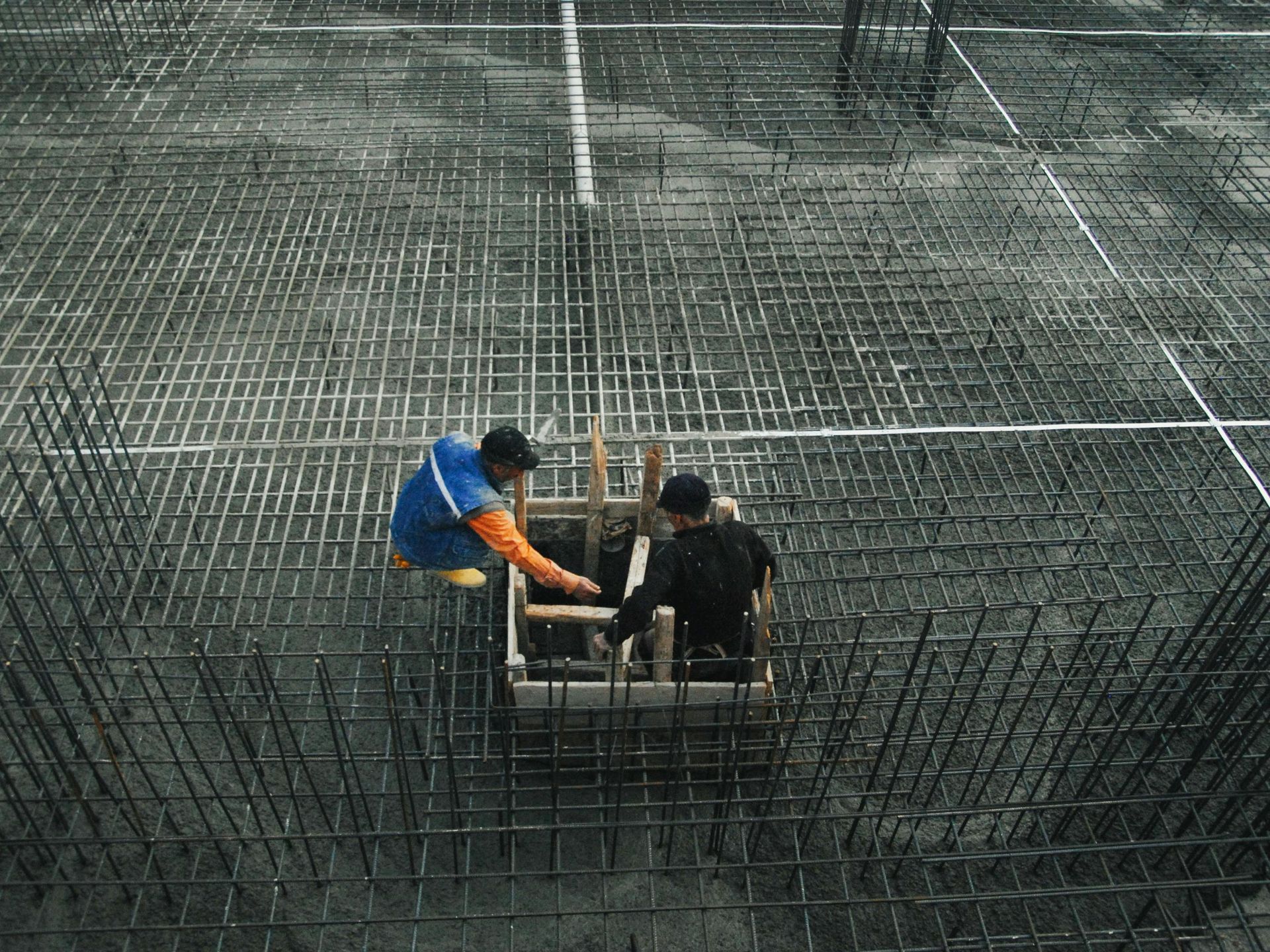
Slab thickness alone doesn't control cracking. Reinforcement holds the residential concrete together when the soil beneath it moves. Two options dominate residential driveway work:
Wire Mesh
Welded wire reinforcement is the lower-cost option. It controls cracking after it starts, but doesn't add significant structural strength, and it works for 4-inch slabs in stable soil with light passenger vehicle loads.
Rebar
Typically using #3 or #4 grade 60 steel on a 16- to 18-inch grid, rebar is the working standard for most Houston driveways. It adds tensile strength that wire mesh can't match and ties the slab together across the soil movement that defines this market. For driveways across our Greater Houston service area , we recommend rebar over mesh in nearly every situation.
Common Thickness Mistakes That Cause Failure
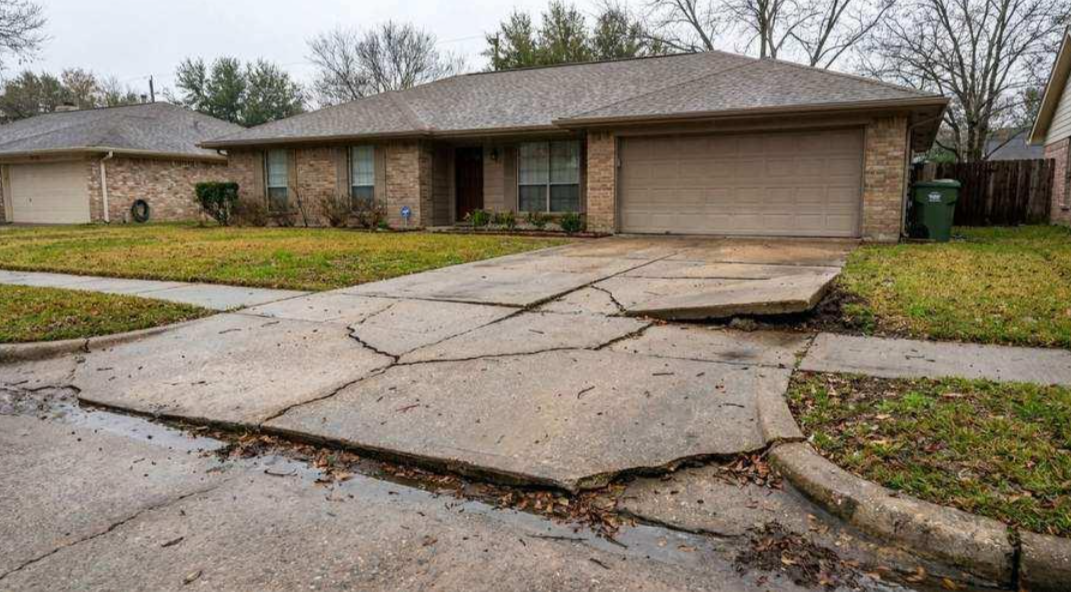
The thickness mistakes we see most often on failed Houston driveways:
- A 3- to 4-inch slab poured directly on raw clay with no base prep
- A 4-inch slab with no reinforcement parking 6,000+ pound trucks
- A driveway poured at the correct thickness, but with control joints spaced more than 12 feet apart
- A thicker slab poured over uncompacted fill that settles under the new weight
Each of these shows up as concrete damage within five years of pour. The lesson isn't that thicker is always better. The lesson is that thickness has to match the load, the soil, and the joint layout.
Frequently Asked Questions
Do you need rebar for a 4-inch slab driveway in Houston?
Yes, most driveways across the Greater Houston area need rebar. The expansive clay soil beneath Houston neighborhoods moves enough that wire mesh alone often isn't sufficient to control cracking in a 4-inch slab. Rebar on a 16- to 18-inch grid is the safer specification, particularly if the driveway will support truck or trailer traffic.
Is a thicker concrete driveway less likely to crack?
Thicker is more crack-resistant up to a point, but slab thickness alone doesn't prevent cracks. A 6-inch slab on uncompacted clay with poorly placed joints will still crack. Crack control depends on the combination of thickness, base prep, reinforcement, and properly spaced control joints. All four factors matter together.
How thick should a concrete driveway apron be in Houston?
A driveway apron, where the slab meets the street, should be poured at least 6 inches thick with rebar reinforcement. The apron carries the highest concentrated load on any residential driveway as vehicles transition from street pavement onto the driveway. Houston jurisdictions also require apron specs in most permit reviews.
Get Thickness Right Before the First Pour
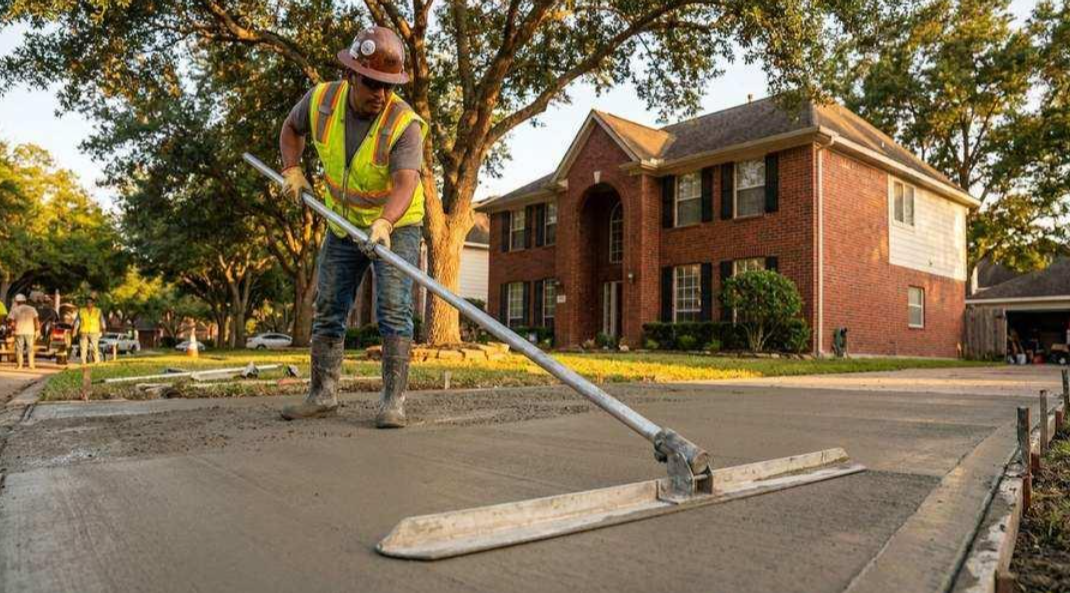
The right driveway thickness in Houston isn't a single number. It's a decision built from soil conditions, vehicle loads, and how long you want the slab to last. For most homeowners, that decision comes down to 5 to 6 inches with rebar reinforcement and a properly compacted base. Choosing the right spec at the planning stage costs nothing extra. Fixing the wrong spec costs as much as a full replacement.
Concrete Specialists of Texas pours every residential driveway to that standard. Contact our team online or call (346) 812-9757 for a free site visit.