
How Long Does a Concrete Driveway Last in Houston's Climate?
A properly installed concrete driveway in Houston lasts 25 to 30 years with routine maintenance, with some well-built slabs exceeding 40 years. Concrete Specialists of Texas designs every concrete driveway around Houston's clay soil and heat exposure, the two factors that determine how long the concrete actually performs.
Most homeowners searching "how long does concrete last" are already dealing with cracks, scaling, or settlement on a driveway that's only five to ten years old. The problem usually isn't the concrete itself. It's what was or wasn't done to the ground beneath it before the pour.
What Shortens a Houston Driveway's Lifespan
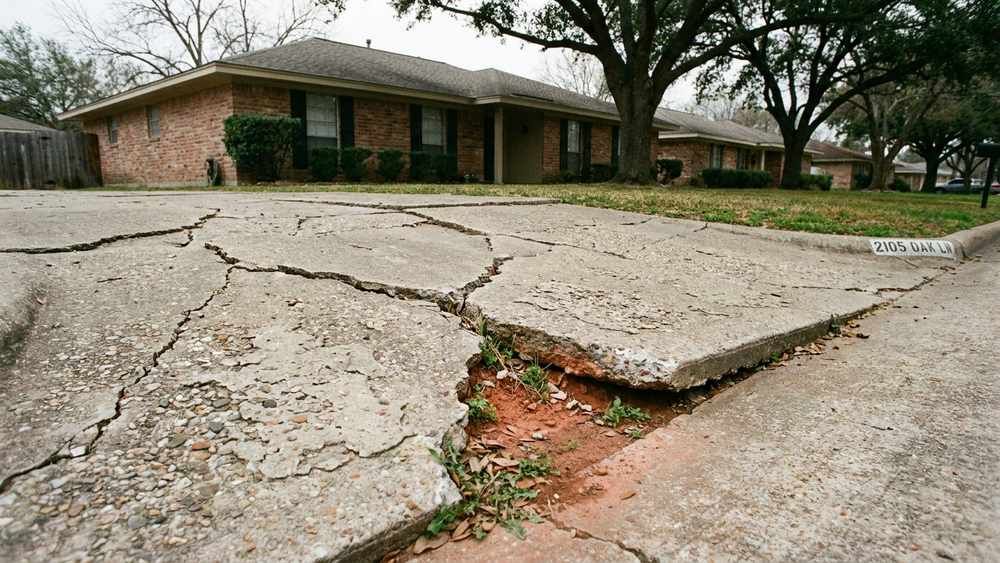
Three installation and maintenance failures account for the majority of premature driveway failures in Southeast Texas.
Skipped Base Preparation
Houston's expansive clay soil swells up to 30 percent by volume when saturated and contracts during drought, creating continuous ground movement. A driveway poured directly on unprepared clay without proper compaction and granular base material starts cracking within three to five years regardless of slab thickness or concrete quality.
Inadequate Curing
Houston's summer temperatures regularly exceed 95°F. Heat accelerates moisture loss from fresh concrete during the 28-day curing window. If the surface dries too fast, the chemical reaction that builds concrete's internal strength gets interrupted. The result is a weaker, more brittle slab that scales and dusts years earlier than properly cured concrete.
No Sealing Schedule
Unsealed concrete in Houston's 75-percent average humidity absorbs moisture year-round. That moisture contributes to staining, biological growth, and gradual surface erosion that shortens the driveway's functional life by 10 to 15 years compared to sealed concrete.
Factors That Maximize Your Driveway's Service Life
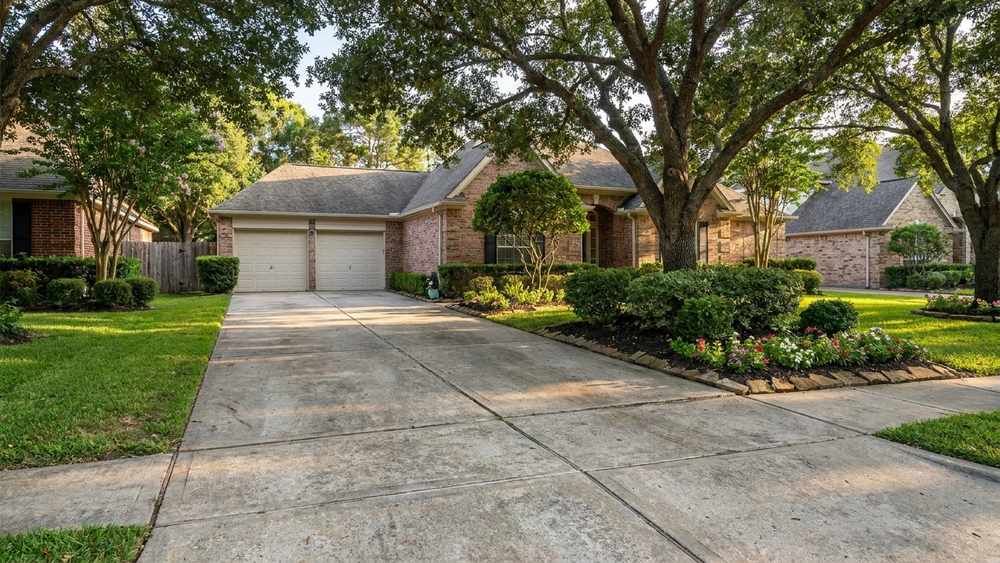
Three factors separate Houston driveways that last a decade from those that perform for three decades:
- Proper base work: 4 to 6 inches of compacted granular fill on top of prepared clay subgrade
- Adequate slab thickness: 4 inches minimum for residential, 5 to 6 inches for heavy vehicles or high-clay areas like The Woodlands and Baytown
- Routine sealing: every two to three years with a penetrating sealer that blocks moisture without trapping it
Houston's climate works in concrete's favor in one critical way: the absence of freeze-thaw cycles. In northern states, water trapped in concrete pores expands when it freezes, grinding down the slab from the inside out over years. Houston's mild winters skip this cycle entirely, which is why properly installed slabs here can outlast identical concrete poured in Minnesota or Ohio by a decade or more. The same installation principles apply to concrete patios and walkways throughout the Houston metro.
Signs Your Driveway Is Aging Faster Than It Should
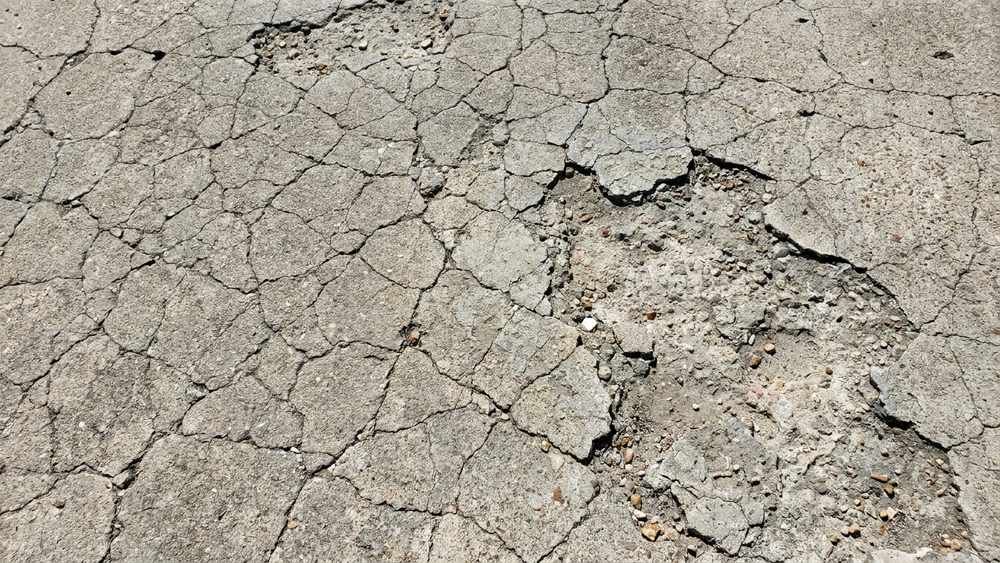
Watch for these warning signs that indicate concrete damage:
- Surface scaling or flaking: the top layer peels away in thin sheets, usually caused by poor curing or lack of sealing
- Map cracking (alligator pattern): a network of small interconnected cracks across the surface, often caused by shrinkage from rapid surface drying during curing
- Settled or heaved sections: parts of the driveway have dropped below or risen above the surrounding surface, pointing to clay soil movement beneath a slab with insufficient base preparation
- Cracks wider than a half-inch: large cracks indicate structural stress, usually from base failure rather than surface wear
If your driveway shows two or more of these signs before it's 15 years old, the original installation likely cut corners on base preparation or curing. A professional inspection can confirm whether repair or replacement is the better path forward.
Frequently Asked Questions
How long does a concrete driveway last without sealing?
An unsealed concrete driveway in Houston typically shows significant wear within 10 to 15 years. Houston's humidity and rainfall accelerate surface degradation, staining, and algae growth on unprotected concrete. Sealing every two to three years extends functional life by a decade or more.
Does Houston's heat damage concrete driveways?
Houston's heat affects concrete most during the curing period right after installation. Once properly cured and sealed, concrete handles extreme heat better than asphalt, which softens and ruts at high temperatures. Concrete Specialists of Texas manages curing timing and compounds as part of its concrete services to prevent heat-related surface defects.
When should you replace a concrete driveway instead of repairing it?
Replace when more than 30 percent of the surface shows cracking, scaling, or settlement, or when sections have heaved more than an inch. At that point, patching costs approach replacement costs while delivering shorter-lived results. A new driveway on properly prepared base runs $8 to $15 per square foot in Houston.
Get the Full Lifespan Out of Your Concrete
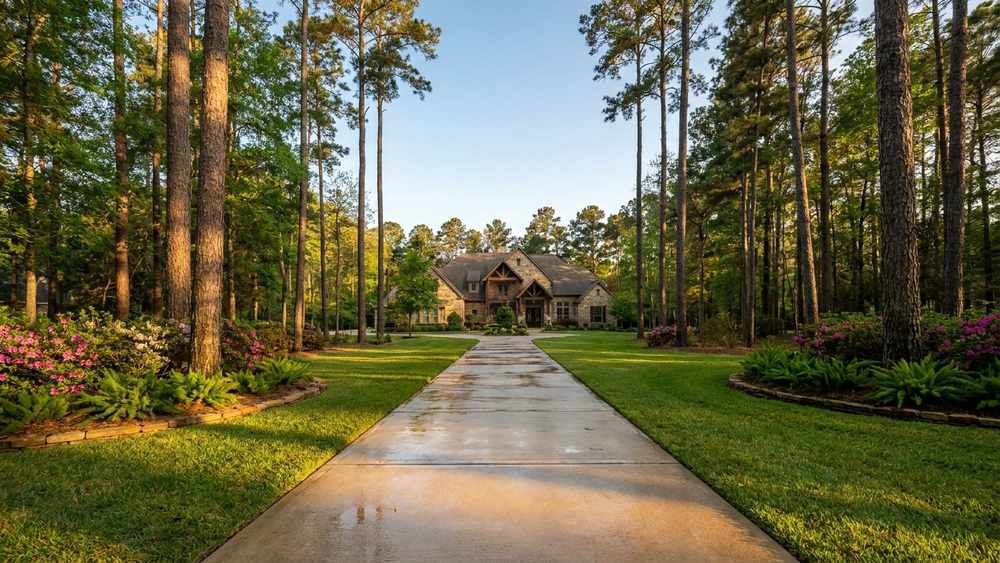
The difference between a 10-year driveway and a 30-year one in Houston comes down to three decisions made before and after the pour: base preparation quality, curing method, and ongoing sealing. The concrete itself is rarely the weak link.
Contact Concrete Specialists of Texas at (346) 812-9757 for a free driveway evaluation. Every assessment includes a review of your slab condition, base integrity, and a clear recommendation on whether repair, sealing, or replacement makes the most financial sense for your property.