
Why Houston's Clay Soil Cracks Concrete—And How Proper Installation Prevents It
Most concrete driveways crack in Houston due to the city's expansive clay soil, which swells when wet and shrinks when dry. This continuous ground movement stresses slabs from underneath and causes cracks that surface-level repairs can't permanently fix. Concrete Specialists of Texas pours residential concrete driveways across the Greater Houston area and builds every base around the specific demands of Houston's clay soil.
A homeowner in Deer Park called about a three-year-old driveway with cracks running through every other panel. The original contractor had poured a 4-inch slab directly on the native clay with no subgrade compaction and no base material. The concrete was fine. The ground underneath was the problem.
How Houston's Clay Soil Damages Concrete
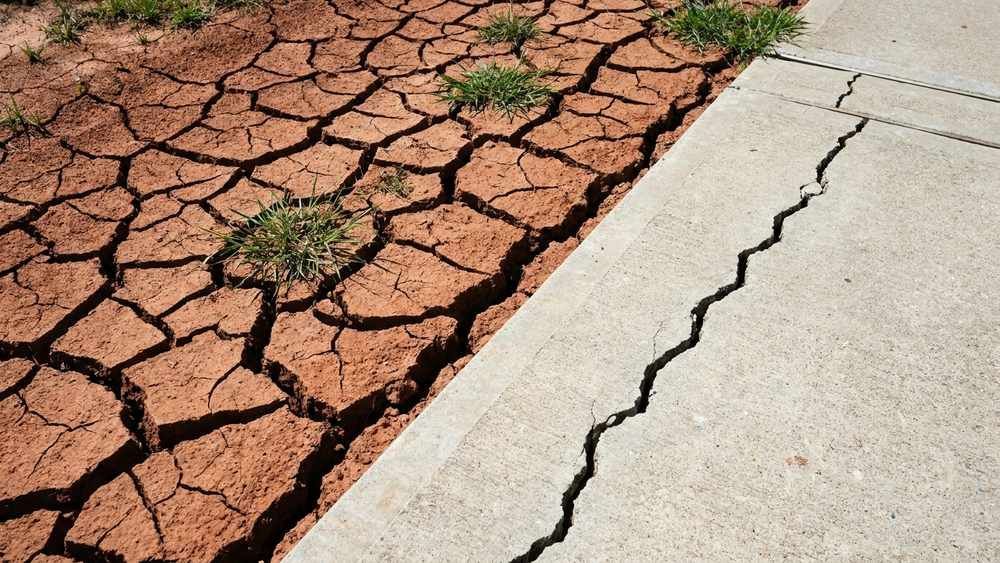
The Shrink-Swell Cycle
Houston sits on montmorillonite-rich clay that changes volume by 10 to 30 percent depending on moisture content. After heavy rain, the clay swells and pushes upward against the slab. During dry stretches, it contracts and leaves voids beneath the concrete. This cycle repeats hundreds of times over a driveway's life, and each repetition creates new stress points that eventually become visible cracks.
Where the Damage Shows Up
The first cracks typically appear at control joints spaced too far apart, at driveway edges where the slab meets the lawn, and across panel centers where the concrete has no room to flex. Sections that settle or heave more than a half-inch indicate the base beneath has failed entirely, and the clay is now dictating where the slab moves.
How Proper Installation Prevents Cracking
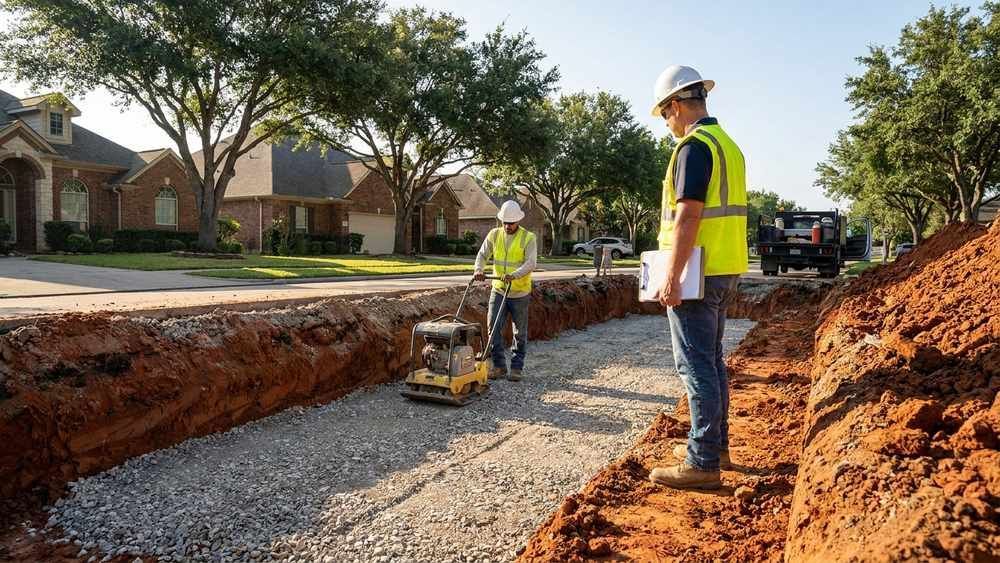
Every step in a clay-soil installation is designed to absorb the ground's movement before it reaches the concrete.
Soil Compaction and Base Material
Professional residential concrete installation starts with excavating the native clay to a depth of 6 to 8 inches, mechanically compacting the remaining subgrade, and backfilling with 4 to 6 inches of crushed limestone or gravel. This stable base layer absorbs the clay's movement instead of transmitting it directly into the slab above.
Slab Thickness and Reinforcement
Standard residential driveways in Houston require a minimum 4-inch slab, with 5 to 6 inches recommended for high-clay areas or driveways that handle heavy vehicles. Welded wire reinforcement or rebar holds the concrete together even when hairline cracks form, preventing them from widening into structural failures.
Control Joints
Control joints are grooves cut into fresh concrete at planned intervals. They create weak points where the concrete cracks in a straight, controlled line instead of randomly across the surface. In Houston, joints should be spaced no more than 8 to 10 feet apart for residential driveways to manage the stress caused by clay movement.
When Cracking Means Bigger Problems
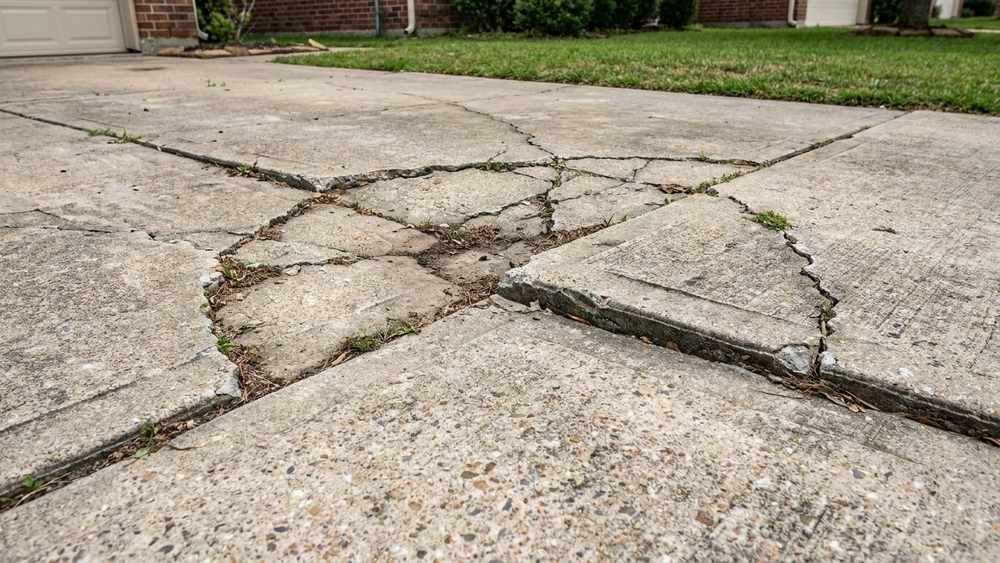
Hairline cracks narrower than a quarter-inch are cosmetic and can be sealed during routine maintenance. Cracks wider than a half-inch, sections that have shifted vertically, and patterns where multiple cracks radiate from a single point all suggest base failure.
In Houston, base failure is almost always caused by one of two things: clay soil that was never properly prepared before the pour, or drainage that directs water under the slab and accelerates the shrink-swell cycle. Both problems require section replacement with proper base work rather than surface patching, because the same soil movement that cracked the original pour will crack any patch applied over the same unstable ground.
Frequently Asked Questions
Why does new concrete crack in Houston?
New concrete that cracks within the first three years in Houston almost always points to inadequate base preparation on clay soil. The slab may have proper thickness and control joints, but if the ground beneath wasn't compacted and layered with granular base material, the clay's movement will crack it regardless.
Can cracked concrete driveways be repaired?
Hairline cracks can be filled with flexible sealant for under $30 per crack. Cracks wider than a half-inch or sections showing settlement need professional evaluation. Concrete Specialists of Texas assesses whether the base has failed and recommends repair or section replacement based on whether the clay beneath is still actively shifting.
How do you prevent concrete from cracking on clay soil?
Three installation steps prevent most clay-related cracking: excavating and compacting the subgrade, adding 4 to 6 inches of granular base material, and pouring a 4-to-6-inch slab with control joints spaced every 8 to 10 feet. Ongoing drainage management keeps water from pooling beneath the slab and reactivating the cycle.
Build It Right the First Time
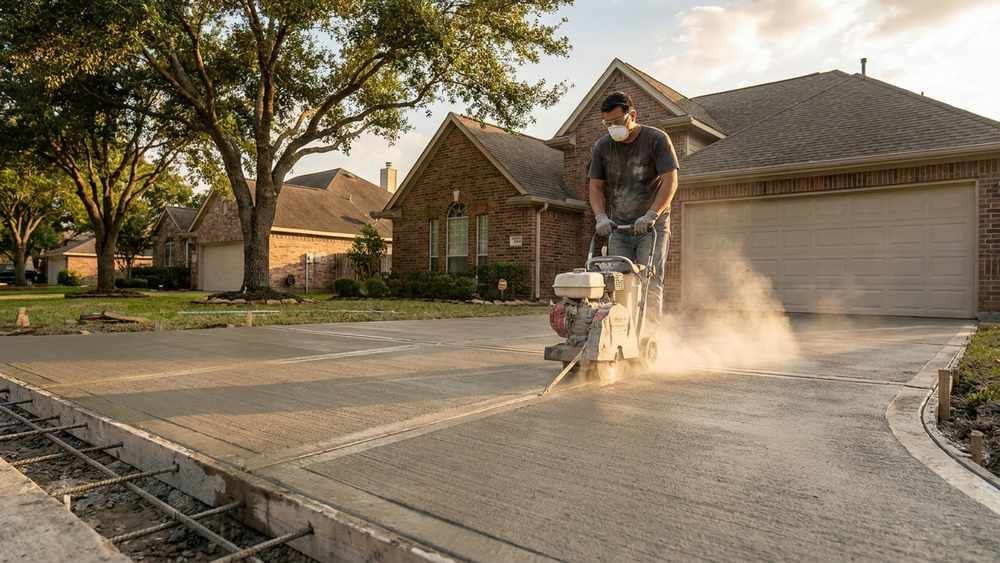
Houston's clay soil doesn't stop moving, but a properly engineered installation absorbs that movement instead of cracking under it. The investment in base preparation, proper slab thickness, and reinforcement pays for itself in avoided repairs over the following 25 to 30 years.
Contact Concrete Specialists of Texas at (346) 812-9757 for a free site evaluation. Every estimate includes a soil assessment, thorough base preparation, and transparent pricing, whether it's a driveway installation or replacement on Houston's clay soil.