
The Best Time to Pour Concrete in Houston (and When to Avoid It)
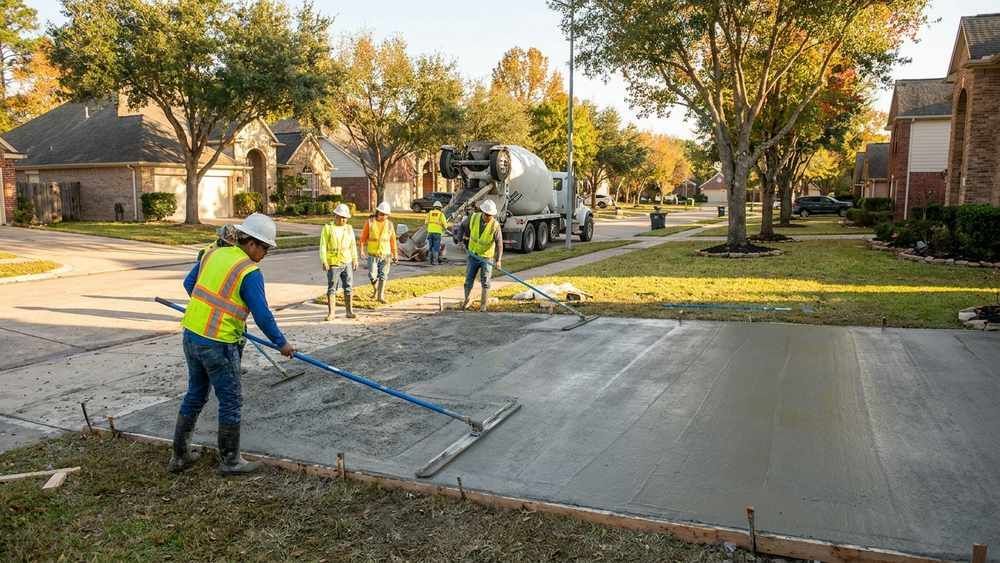
A crew finishes screeding a driveway at 6:30 a.m. on a Saturday in late October, the air still cool enough that the concrete stays workable for a full pass before the surface sets. By noon, the slab is troweled smooth, and the 78-degree afternoon gives the chemical cure the exact conditions it needs. Concrete Specialists of Texas schedules the majority of residential pours between October and March for exactly this reason.
The temperature window matters more than most homeowners realize. Daytime temperatures between 50 and 85°F and overnight lows above 40°F give fresh concrete the slow, steady moisture loss it needs to reach full strength over its 28-day cure. Pouring outside that window isn't impossible, but it demands extra precautions that add cost and risk to every project.
Best Months for Concrete in Houston
October Through December
Fall is the peak season for driveway installations and patio pours across the Houston metro. Average highs drop from 90°F in September to 75°F by November, and humidity eases enough that surface moisture evaporates at a controlled rate rather than flash-drying. Contractors can start pours at standard morning hours instead of pre-dawn, and the concrete stays workable longer through the finishing process.
January Through March
Houston's mild winters make January through March viable pour months that would be off-limits in northern states. Average lows hover between 42 and 52°F, well above the 40°F threshold where concrete curing slows dramatically. The occasional hard freeze requires monitoring, but most winter weeks offer multi-day stretches of 50- to 70-degree weather that produce excellent curing results. Scheduling a pour in this window often means shorter lead times since demand drops after the fall rush.
When to Avoid Pouring Concrete in Houston
June Through September: Extreme Heat
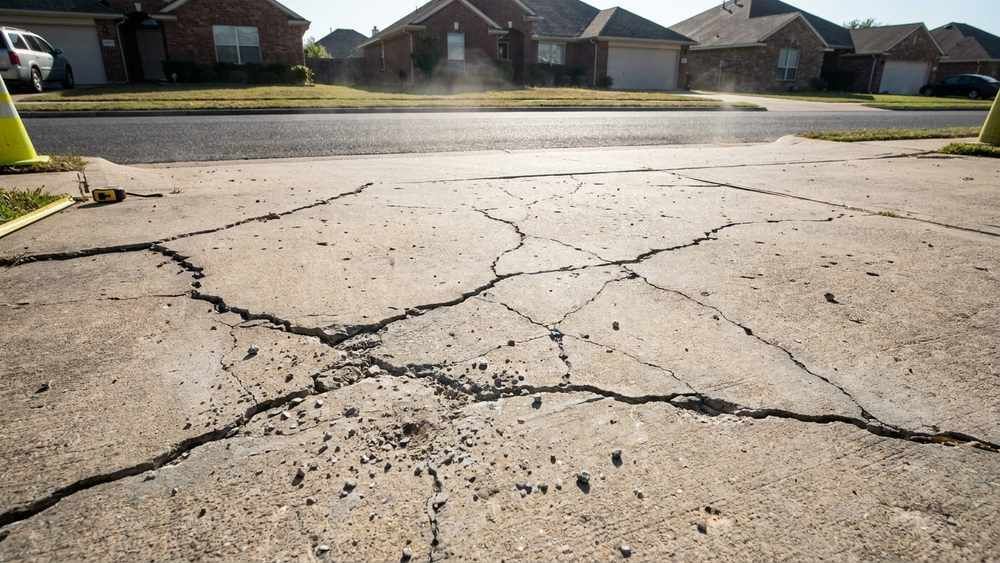
Houston summers regularly push daytime temperatures past 95°F with surface temperatures on exposed ground exceeding 140°F. Pouring concrete in these conditions creates three problems: the mix loses workability before finishing crews can complete their passes, rapid surface drying causes plastic shrinkage cracks within hours, and the chemical cure generates internal heat that compounds the ambient temperature stress. Summer pours are possible with ice-water batching, evaporation retarders, and pre-dawn start times, but those measures add $1 to $3 per square foot to the project cost.
Heavy Rain Windows
Houston averages 50 inches of rainfall annually, with the heaviest concentration from May through October. Rain on fresh concrete washes cement paste from the surface, weakens the top layer, and creates permanent pitting and discoloration. Concrete Specialists of Texas monitors weather forecasts closely and reschedules pours when rain probability exceeds 40 percent within the first 24 hours after placement. Protecting a pour with tarps is a last resort, not a planned strategy.
How Temperature Affects Concrete Curing
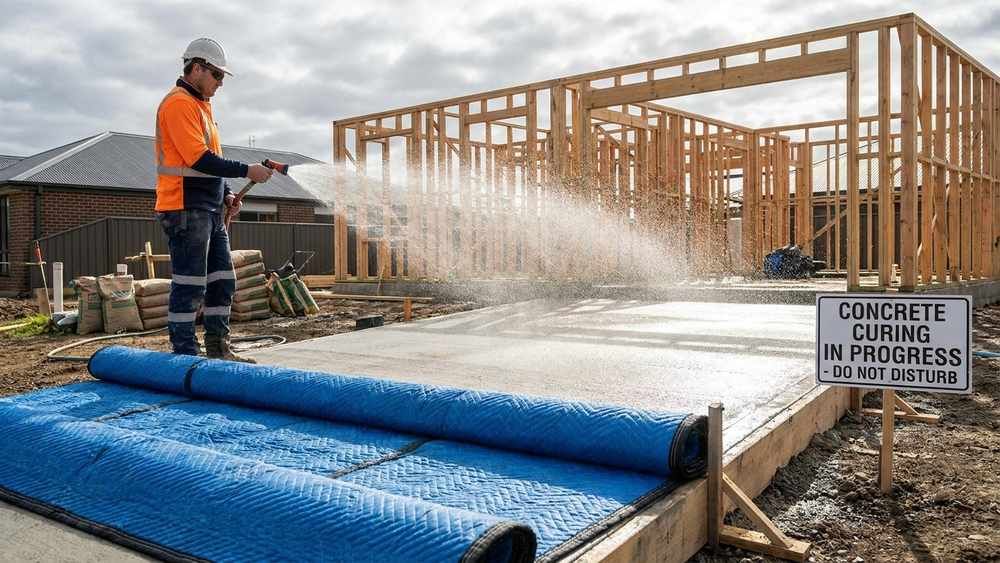
Concrete doesn't dry to harden. It cures through a chemical reaction called hydration that requires water and moderate temperatures over 28 days. Temperature controls the speed and completeness of that reaction:
- Below 40°F: hydration slows to near zero and the concrete gains almost no strength until temperatures rise
- 50°F to 85°F: the ideal range where hydration proceeds at a steady, predictable rate that produces maximum long-term strength
- Above 90°F: hydration accelerates too fast, producing early strength but reducing the concrete's ultimate 28-day strength and increasing crack risk
Houston's climate makes the first 24 to 48 hours after a pour the most critical window. A slab poured on a 98-degree July afternoon reaches its initial set faster, but the rapid early cure traps internal stresses that show up as cracks days or weeks later. The same mix poured on a 72-degree November morning cures more slowly, develops fewer internal stresses, and reaches higher ultimate strength. Properties in areas like Friendswood and surrounding communities see the best results from fall and winter pours on properly prepared clay soil bases.
Frequently Asked Questions
Can you pour concrete in the summer in Houston?
Summer pours are possible but require extra precautions: pre-dawn start times, ice or chilled water in the mix, evaporation retarders on the surface, and immediate curing compound application. These measures add cost and don't fully eliminate the higher crack risk that comes with pouring above 95°F. When scheduling allows, waiting for October is the more reliable choice.
What temperature is too cold to pour concrete in Houston?
Below 40°F, concrete curing slows dramatically and the surface can freeze before gaining enough strength to resist damage. Houston rarely sustains temperatures below 40°F for more than a day or two, so most winter pours proceed safely with standard cold-weather monitoring. Concrete Specialists of Texas uses insulating blankets on the rare occasions when overnight freezes are forecast within 48 hours of a pour.
How long does concrete need to cure before rain in Houston?
Fresh concrete needs at least 4 to 8 hours of initial set time before it can withstand light rain without surface damage. Heavy rain within the first 2 to 4 hours can ruin the surface finish entirely. After 24 hours, moderate rain has minimal effect on properly finished concrete. This is why scheduling around Houston's rain forecast is critical for every pour.
Schedule Your Pour Around Houston's Weather

Timing a concrete pour to Houston's climate isn't about convenience. It's about placing the material in conditions where the chemistry works in your favor rather than against it. October through March gives you the temperature window, the lower humidity, and the lower risk of rain that helps concrete last 25 to 30 years.
Contact Concrete Specialists of Texas at (346) 812-9757 to schedule your patio, driveway, or walkway pour during the optimal window. Every estimate includes a site assessment, weather-adjusted scheduling, and transparent pricing with no hidden fees.