
Texas ADA Ramp Compliance: What Builders and Businesses Need to Know
A non-compliant ADA ramp is more than a concrete-related problem. It’s a legal liability waiting to happen. In Texas, businesses with accessible routes that fail federal standards can face Department of Justice complaints, private lawsuits, and expensive remediation after a failed inspection.
The good news is that compliance is straightforward when you work with a contractor who actually knows the specifications. Concrete Specialists of Texas installs ADA-compliant ramps for commercial properties across Greater Houston and Southeast Texas. In this guide, we cover what builders and business owners need to understand before the first form is set.
What ADA Ramp Requirements Actually Cover in Texas
The Americans with Disabilities Act (ADA) sets the federal baseline, while ADA Standards for Accessible Design apply in Texas just as they do everywhere else—but state and local jurisdictions can layer additional requirements on top.
The Texas Accessibility Standards (TAS), administered by the Texas Department of Licensing and Regulation, govern new construction and alterations across the state. When the two sets of standards differ, the more restrictive one applies. Most Houston-area commercial projects must satisfy both.
Core Federal Requirements
The core federal requirements are specific:
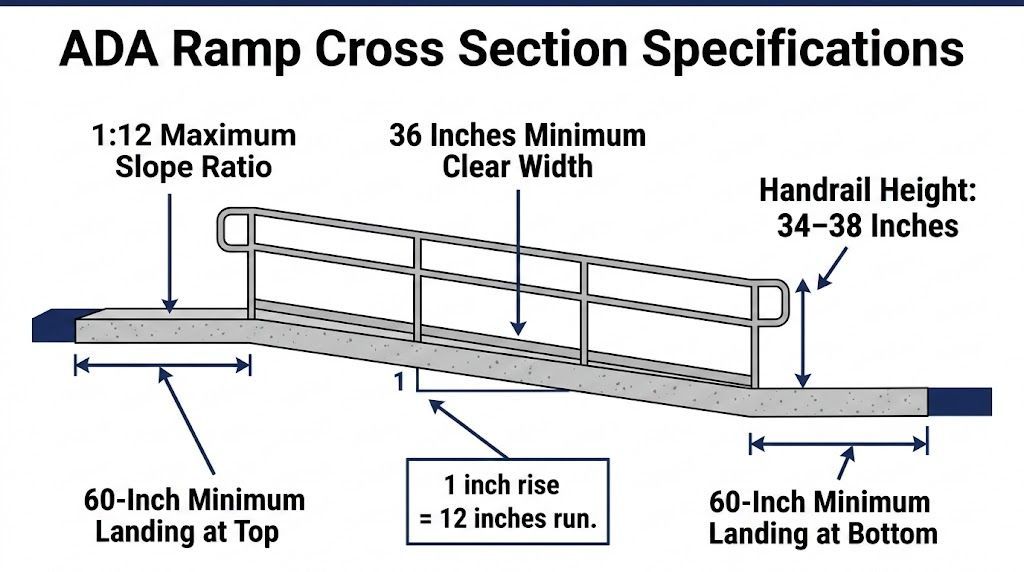
- Slope Ratio: Ramp runs must not exceed 1:12, meaning for every inch of vertical rise, you need at least 12 horizontal inches of run. A 6-inch elevation change requires a minimum 6-foot ramp.
- Width: At least 36 inches clearance between handrails
- Landings: Required at the top and bottom of every run, at least 60 inches long and as wide as the ramp itself
- Handrails: Required at heights between 34 and 38 inches
- Edge protection: Mandatory on all ramp runs
- Surface texture: Required for traction; not an optional upgrade
The Details That Matter Most for Ramp Installation
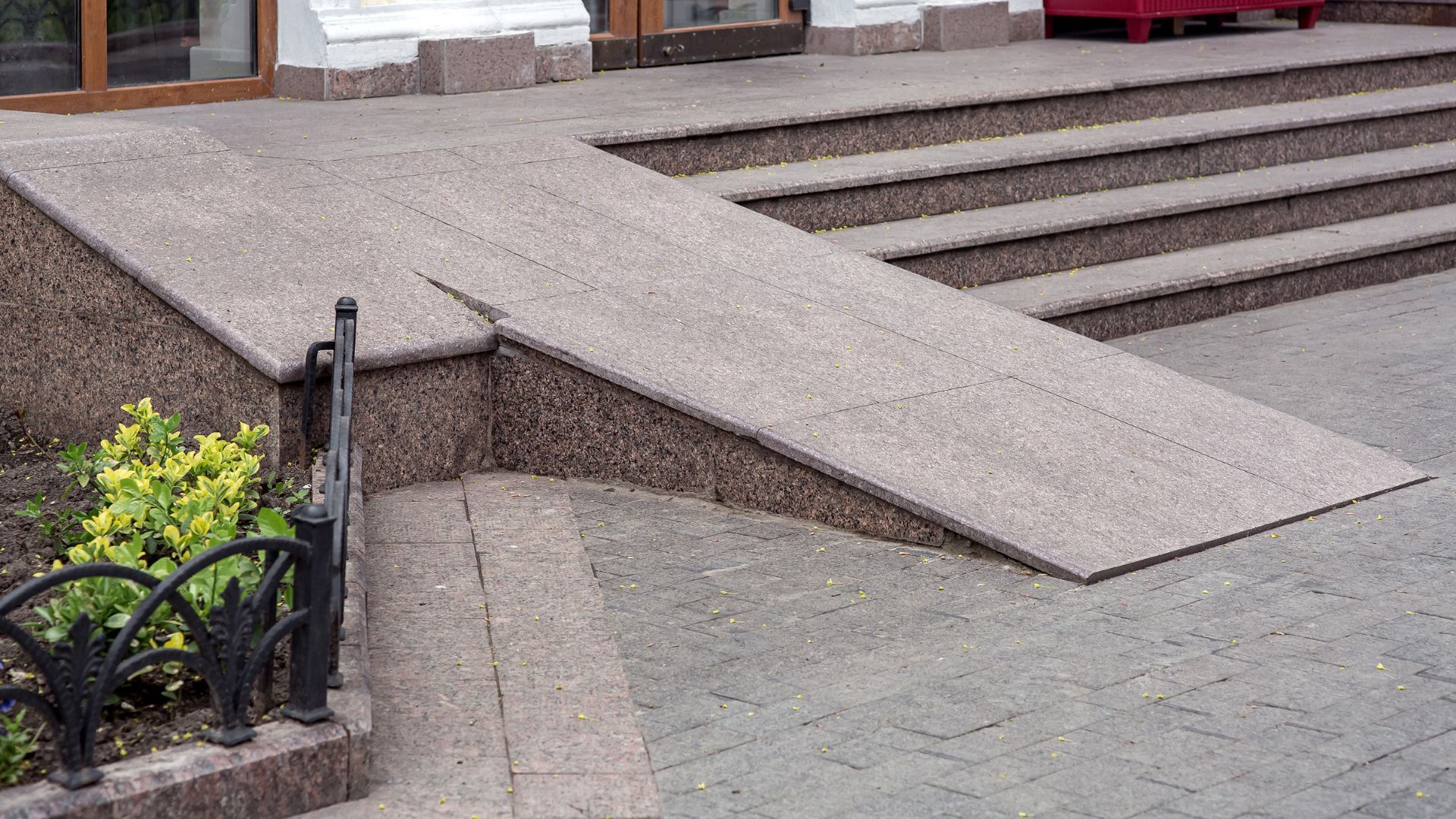
Two requirements cause the most compliance failures in field inspections: slope accuracy and surface texture.
Slope Accuracy
A slope that measures 1:11 instead of 1:12 is non-compliant under ADA and TAS standards. That fraction of a degree isn’t something you eyeball. It requires proper grading, laser-level verification, and experienced formwork.
On commercial properties in Deer Park and La Porte, where older concrete infrastructure is common and site grades are rarely uniform, getting the slope right often means more site prep than owners expect.
Surface Texture
Surface texture matters because a smooth concrete finish becomes a slip hazard in wet conditions. Houston's heavy annual rainfall increases that risk. A broom finish—the standard for exposed exterior concrete—provides enough texture to satisfy ADA traction requirements while still being manageable for wheelchair users and pedestrians alike.
Exposed aggregate finishes can work in some applications, but the aggregate size and profile need to stay within ADA guidance for surface regularity. This is an area where a concrete contractor with commercial concrete experience makes a real difference compared to a provider who primarily works residential jobs.
Common Ramp Compliance Failures on Houston Commercial Properties
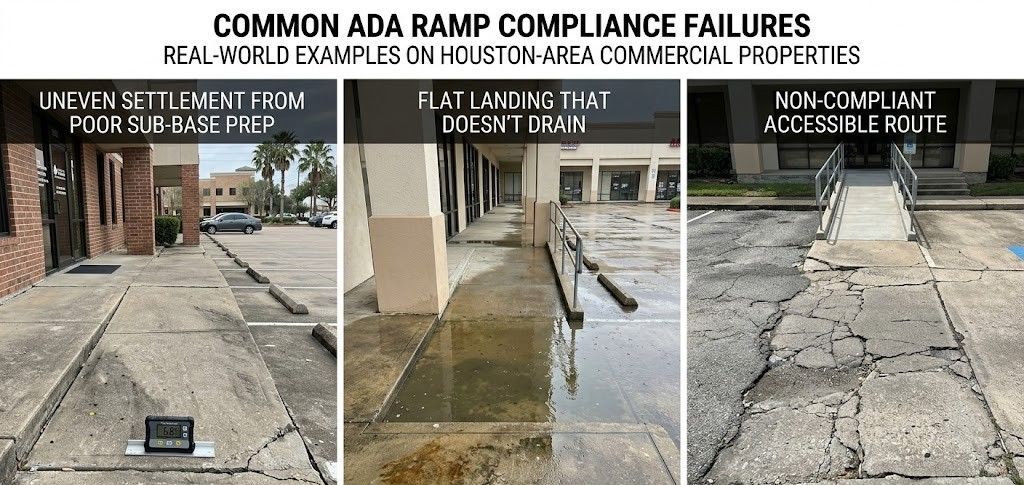
We see the same issues come up again and again when fixing ramps on Houston-area commercial properties.
Uneven Settlement From Poor Sub-Base Prep
The most common is a ramp that was built to the right slope but settled unevenly over time because the sub-base wasn’t properly compacted. Houston's expansive clay soil shifts with seasonal moisture changes. Clay swells when wet and shrinks when dry. A ramp without a properly prepared base will eventually drift out of grade. This isn’t hypothetical; it’s the predictable outcome of skipping compaction and base prep in this soil type.
Flat Landings That Don't Drain
A second frequent issue involves the landing at the base of the ramp. Codes require that landing to drain away from the ramp, but many installations leave the concrete flat. Standing water accumulates, creates a hazard, and introduces moisture into the concrete over time. A properly designed ramp system accounts for drainage slope on the landing without compromising the ramp run's own slope requirements.
Non-Compliant Accessible Routes
Connecting sidewalk and accessible route repairs to the ramp project matters too. A compliant ramp connected to a deteriorating, uneven sidewalk still produces a non-compliant accessible route under ADA rules. The whole path from parking to entrance must meet standards, not just the ramp itself.
Get Your Ramp Right the First Time
Building an ADA-compliant ramp isn’t something that should be figured out as you go. The slope tolerances are tight, the documentation requirements are real, and remediation after a failed inspection typically costs significantly more than getting it right from the start.
Concrete Specialists of Texas is a licensed and insured commercial concrete contractor serving businesses throughout Greater Houston and Southeast Texas. We have the technical knowledge to install ramp systems that meet both ADA and Texas Accessibility Standards.
Contact us to get a free quote for your commercial ramp project.